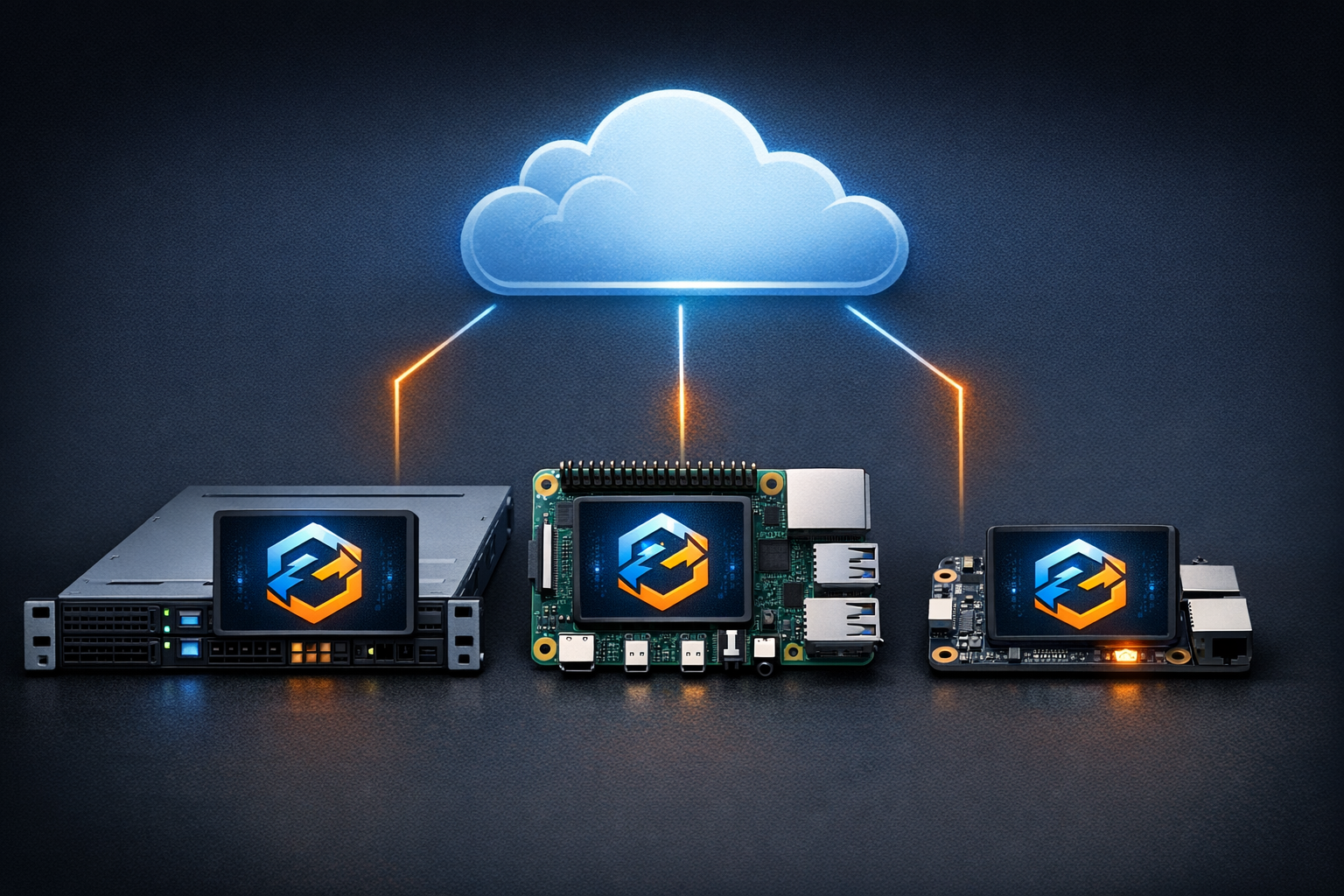
Not every device in the field runs on an Intel CPU. Edge computing, IoT gateways, and embedded systems often use ARM processors. If your tunneling solution only supports x86, you are locked out of a significant portion of deployable hardware.
Six Builds, Two Platforms
ProxyPass nodes ship as multi-architecture Docker images for Linux and as native executables for Windows — six builds total:
- Linux (Docker): amd64 (Intel/AMD servers), arm64 (Raspberry Pi 3/4/5, Apple Silicon), armv7 (Raspberry Pi 2/3/4 32-bit)
- Windows (native): x64 (Intel/AMD 64-bit), x86 (Intel/AMD 32-bit), ARM64 (Snapdragon/ARM-based Windows devices)
The install script on Linux detects the host architecture automatically and pulls the correct Docker image. On Windows, you download the matching executable for your architecture. There is no manual architecture detection on either platform — the right build runs on the right hardware.
Scenario: Mixed Fleet at a Logistics Company
A logistics company manages remote monitoring stations at 40 distribution centers. Their fleet is a patchwork:
- The newer sites run Intel NUCs with Linux (amd64)
- Some sites have Raspberry Pi 4 units (arm64) running temperature monitoring
- A few legacy sites still use older Pi 2 boards (armv7) from a pilot project
- The headquarters has Windows workstations (x64) that need remote access capability
With most tunneling solutions, this company would need different software for each platform — or simply could not support the ARM devices at all.
With ProxyPass, every device runs the same node. The same install command works on the NUC and the Pi. The same dashboard shows all 40+ nodes side by side. The same API manages them all. The logistics team does not think about architectures — they think about sites.
Performance on Low-Power Hardware
A Raspberry Pi 3 running a ProxyPass node can handle four simultaneous Full HD video streams through the tunnel without dropping frames. The node itself is lightweight — it maintains a single TCP tunnel and processes commands. The heavy lifting is done by whatever application you run alongside it.
For businesses deploying hardware at customer sites, multi-architecture support means flexibility. You choose hardware based on the use case and budget — not based on what your tunneling provider supports. A €30 Raspberry Pi works just as well as a €500 mini PC, and a Windows ARM tablet works just as well as an Intel workstation. The node runs the same, connects the same, and appears in the same dashboard.
Six builds, two platforms, every major architecture covered. Deploy wherever your devices are.